Baby-led weaning · age-specific guide
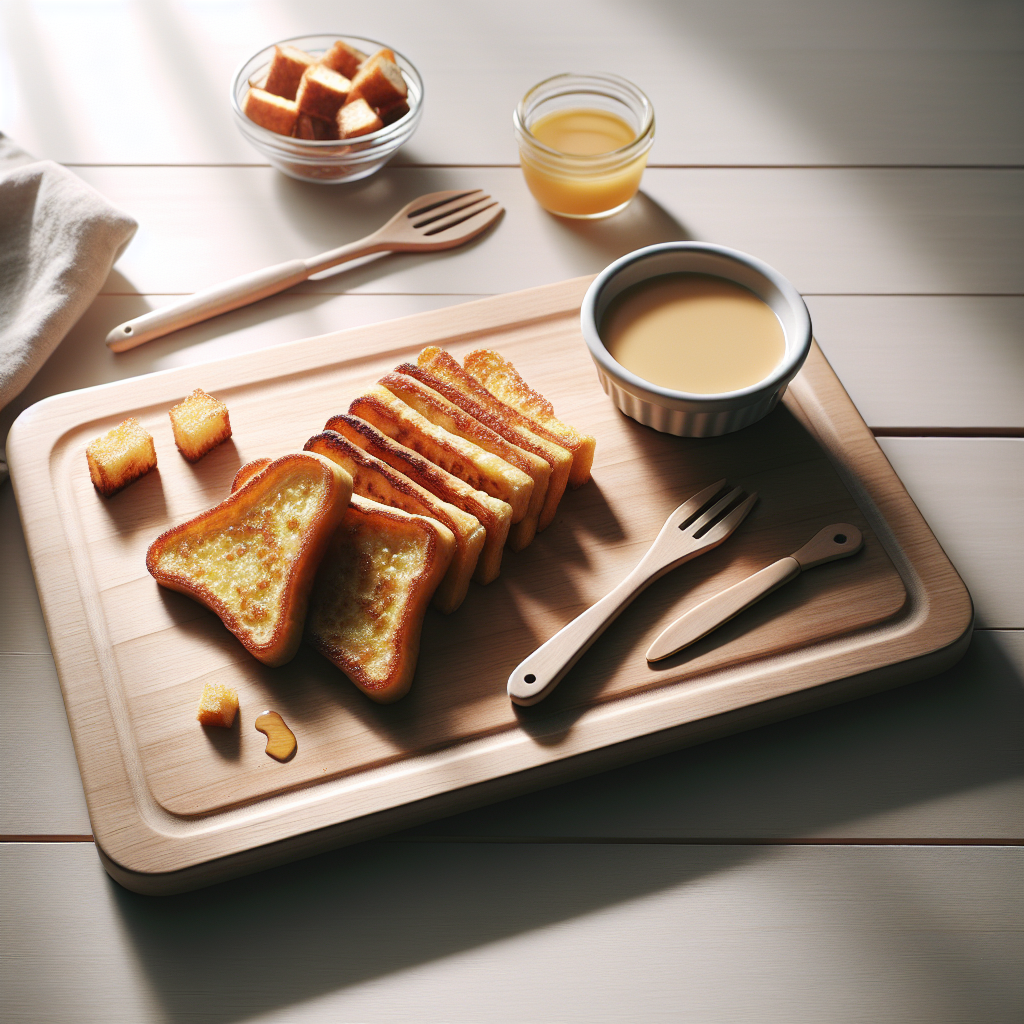
French toast strip for 6–8 months
French toast strips can be introduced from around 6 months of age, as soon as your baby is ready to start solid foods. Because French toast is made with egg and bread, it's important to ensure both ingredients have been safely introduced beforehand if following an allergen introduction plan. Serve French toast whilst it's still soft and pliable, avoiding any crispy or hard edges that could pose a risk.
How to serve at 6–8 months
Cut French toast into strips about the length of your adult finger and roughly the width of two adult fingers, ensuring your baby can grasp the strip with some sticking out of their fist. The toast should be cooked through but still very soft and pliable, not crispy or hard at the edges. Serve on its own or with a thin spread of mashed banana, smooth nut butter, or unsweetened yoghurt to add moisture and make it easier to manage.
Nutrition highlights
French toast provides carbohydrates for energy along with protein from the egg coating, supporting growth and development. The bread base offers B vitamins and, if wholegrain bread is used, additional fibre to support digestive health. Adding a spread of nut or seed butter can boost the nutritional value by adding healthy fats and extra protein.
Lower-risk serving reminders
French toast has a low choking risk when prepared correctly because it becomes soft and moist after cooking, making it easy for babies to gum and chew. The texture breaks down readily in the mouth, and when cut into appropriately sized strips, it's manageable for little hands and mouths.
Allergen introduction checklist
French toast contains common allergens including egg, wheat (from bread), and often dairy (from milk used in the egg mixture). If your baby has already been introduced to these allergens individually without reaction, French toast can be a lovely way to combine them in a familiar breakfast food.
Common questions
Does French toast contain eggs?
Yes, French toast is made by dipping bread into a mixture of beaten egg (and usually milk) before cooking, so it contains egg as a primary ingredient.
Can I make French toast without milk for my baby?
Yes, you can make French toast using just beaten egg or by substituting the milk with a dairy-free alternative, breast milk, or formula to suit your baby's dietary needs.
Should I add sugar to French toast for my baby?
It's best to avoid adding sugar to French toast for babies, as they don't need added sugars in their diet. The natural flavours of egg and bread are sufficient, or you can add a touch of cinnamon for flavour.
General feeding checklist
- Seat baby upright and stable for all meals.
- Model slow chewing and allow baby to control pace.
- Stop and reset if baby is upset, tired, or over-stuffed.
Readiness signs to check
- Baby can sit upright with minimal support during meals.
- Hands and mouth coordinate for bringing food to the mouth.
- Tongue-thrust reflex is reduced, so food is not immediately pushed out.
- Interest in self-feeding and opening mouth for food cues is visible.
Pause and seek advice if
- Coughing is persistent or distress does not settle quickly during meals.
- You notice repeated vomiting, rash, swelling, wheeze, or breathing changes after a food.
- Baby struggles with swallowing progression over multiple meals despite texture adjustments.
- There is a known medical condition affecting feeding, growth, or airway safety.
Other ages: 9–11 months · 12–24 months