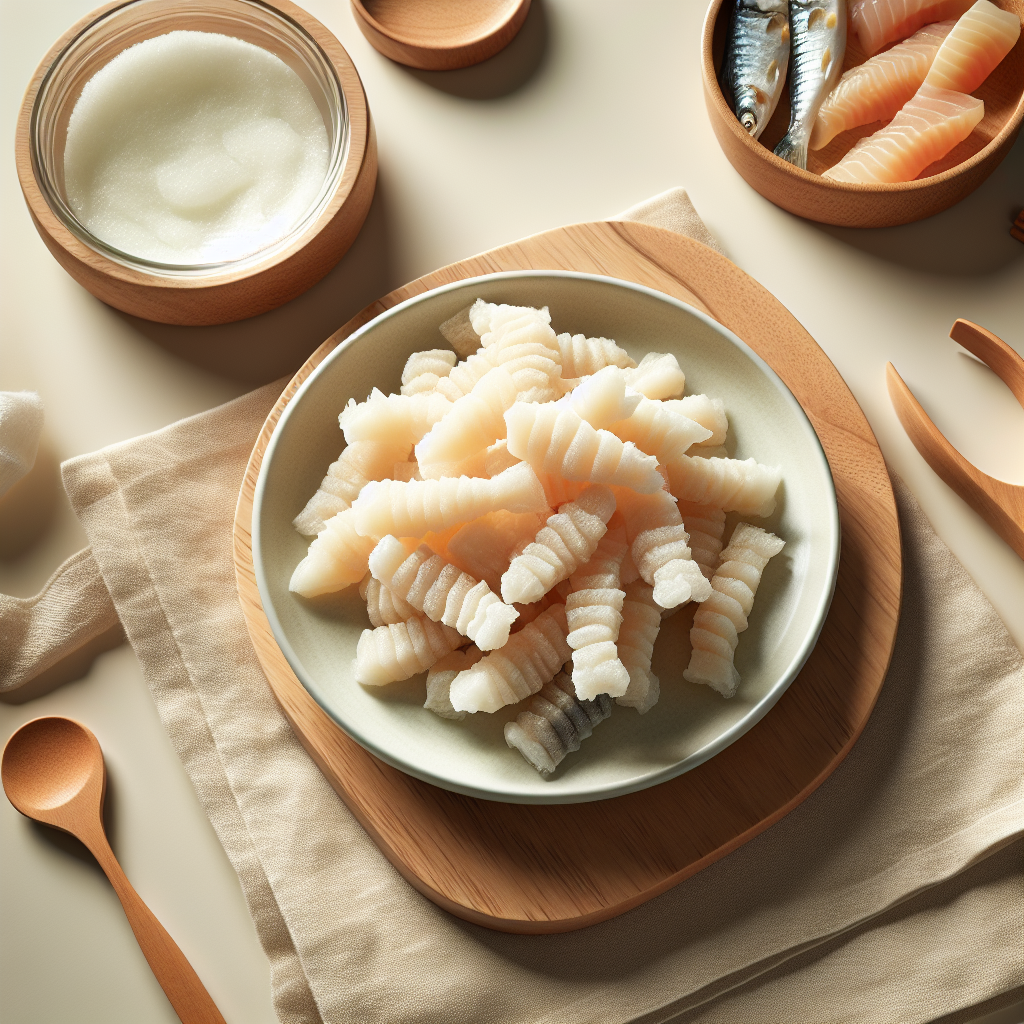
Baby-led weaning · age-specific guide
Fish floss soft for 6–8 months
Fish floss soft can be introduced as soon as your baby is ready to start solids, which is typically around 6 months of age. Because fish is a common allergen, it's important to introduce it early and often, as part of a varied diet. The soft, fluffy texture of fish floss makes it easier for beginners to manage compared to firmer fish preparations.
How to serve at 6–8 months
Mix a small pinch of fish floss soft into porridge, mashed vegetables, or yoghurt to help it clump together and make it easier for your baby to scoop with their hands. You can also sprinkle it onto strips of well-cooked toast or rice cakes spread with a thin layer of mashed avocado or hummus. The soft texture will dissolve easily as your baby explores it with their mouth.
Nutrition highlights
Fish floss soft is an excellent source of protein, which supports growth and development in babies. It also provides iron, an essential nutrient that supports brain development and helps prevent anaemia, which is particularly important from 6 months onwards. Additionally, fish contains omega-3 fatty acids and other nutrients that support healthy brain and eye development.
Lower-risk serving reminders
Fish floss soft has a low choking risk because its fine, fluffy texture dissolves easily in the mouth when mixed with saliva. The small, tender strands are easy for babies to move around and swallow without forming a firm mass that could obstruct the airway.
Allergen information
Fish is a common allergen and must be introduced carefully as one of the priority allergenic foods. When offering fish floss soft for the first time, serve a small amount and watch for signs of an allergic reaction such as hives, swelling, vomiting, or difficulty breathing.
Fish
Common questions
Is fish floss safe for babies just starting solids?
Yes, fish floss soft is safe for babies from 6 months due to its soft, fluffy texture that dissolves easily in the mouth. Always introduce fish as a known allergen and watch for any signs of reaction.
How much fish floss should I offer my baby?
Start with a small pinch mixed into other foods for first exposures, then gradually increase to about 1–2 teaspoons as your baby becomes comfortable with the texture and shows no allergic reaction.
Can I serve fish floss on its own or should it be mixed with other foods?
Fish floss can be served on its own, but mixing it with softer foods like porridge, mashed vegetables, or yoghurt can make it easier for younger babies to manage and helps prevent the fine strands from scattering.
General feeding checklist
- Seat baby upright and stable for all meals.
- Model slow chewing and allow baby to control pace.
- Stop and reset if baby is upset, tired, or over-stuffed.
Readiness signs to check
- Baby can sit upright with minimal support during meals.
- Hands and mouth coordinate for bringing food to the mouth.
- Tongue-thrust reflex is reduced, so food is not immediately pushed out.
- Interest in self-feeding and opening mouth for food cues is visible.
Pause and seek advice if
- Coughing is persistent or distress does not settle quickly during meals.
- You notice repeated vomiting, rash, swelling, wheeze, or breathing changes after a food.
- Baby struggles with swallowing progression over multiple meals despite texture adjustments.
- There is a known medical condition affecting feeding, growth, or airway safety.
Other ages: 9–11 months · 12–24 months