Baby-led weaning · age-specific guide
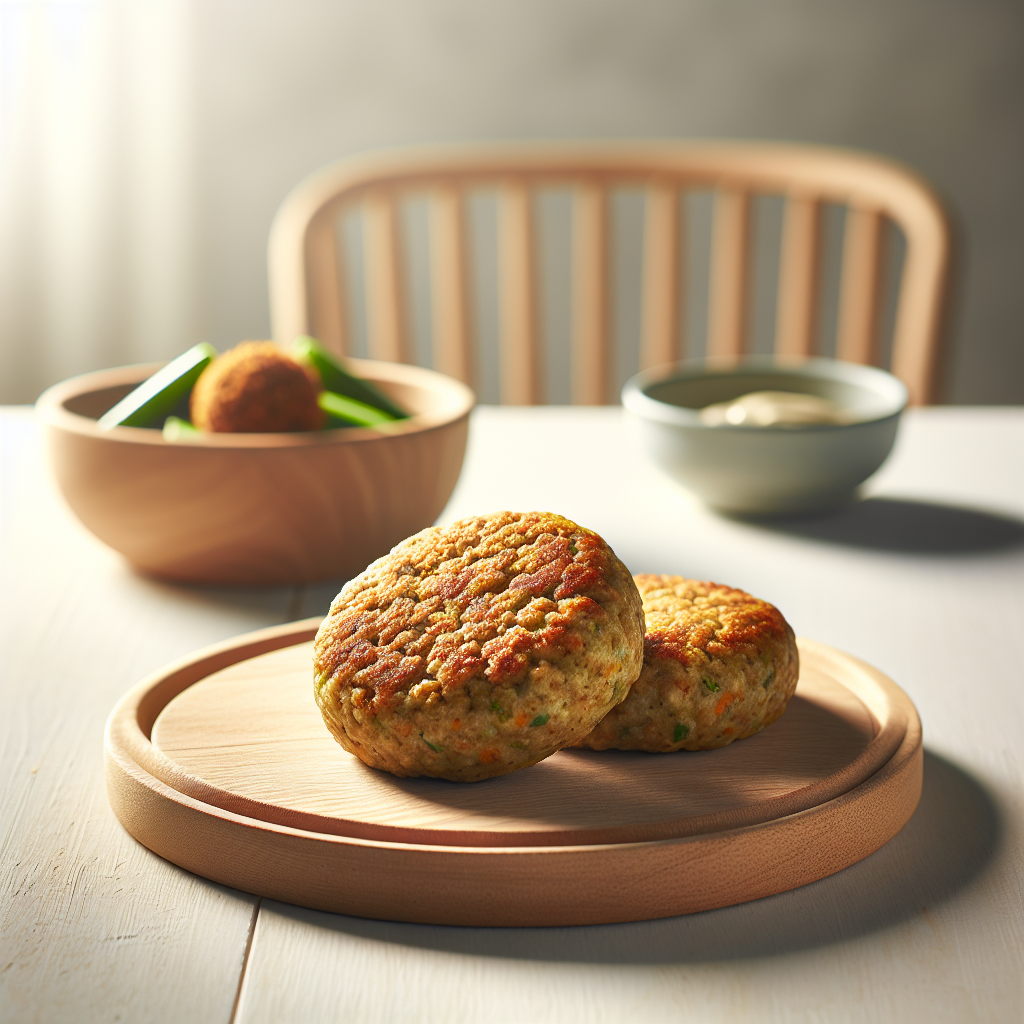
Falafel patty soft for 6–8 months
Soft falafel patties can be introduced from around 6 months of age, as soon as your baby is ready to start solid foods. These patties offer a nutritious way to serve legumes in a manageable form for new eaters. Ensure the patties are very soft throughout and avoid shop-bought versions that may be crispy or contain high amounts of salt.
How to serve at 6–8 months
Offer a soft falafel patty about the size of an adult's palm, ensuring it is very soft and mashable between your fingers. The patty should be moist enough to break apart easily in baby's mouth and not form a crust. Serve on its own or alongside mashed vegetables, allowing baby to hold the whole patty and self-feed by gnawing and sucking.
Nutrition highlights
Soft falafel patties are rich in plant-based protein and iron, both essential nutrients for babies' growth and development. They also provide B vitamins, fibre for healthy digestion, and complex carbohydrates for sustained energy. The chickpeas or beans used in falafel contain folate and magnesium, supporting overall health and wellbeing.
Lower-risk serving reminders
Soft falafel patties carry a low choking risk because they are moist, easily mashable, and break down readily in the mouth. The soft texture means they don't require strong chewing skills and won't form hard pieces that could block the airway.
Allergen introduction checklist
Traditional falafel made from chickpeas or broad beans is not a common allergen. However, some falafel recipes may contain sesame seeds (in the form of tahini or sesame paste), which is a common allergen, so always check the ingredients if you haven't made them yourself.
Common questions
Can I give my 6 month old shop-bought falafel
Shop-bought falafel is often too crispy, high in salt, and may contain additives unsuitable for babies. Homemade soft falafel patties are the safer choice for young babies.
How do I make falafel soft enough for baby-led weaning
Ensure the patties are baked or steamed rather than fried to keep them soft. Use well-cooked chickpeas or beans and avoid letting the outside become crispy or hard.
Are falafel patties a good source of iron for babies
Yes, falafel made from chickpeas or beans provides a good source of plant-based iron, which is important for babies' development. Pair with vitamin C-rich foods to help iron absorption.
General feeding checklist
- Seat baby upright and stable for all meals.
- Model slow chewing and allow baby to control pace.
- Stop and reset if baby is upset, tired, or over-stuffed.
Readiness signs to check
- Baby can sit upright with minimal support during meals.
- Hands and mouth coordinate for bringing food to the mouth.
- Tongue-thrust reflex is reduced, so food is not immediately pushed out.
- Interest in self-feeding and opening mouth for food cues is visible.
Pause and seek advice if
- Coughing is persistent or distress does not settle quickly during meals.
- You notice repeated vomiting, rash, swelling, wheeze, or breathing changes after a food.
- Baby struggles with swallowing progression over multiple meals despite texture adjustments.
- There is a known medical condition affecting feeding, growth, or airway safety.
Other ages: 9–11 months · 12–24 months