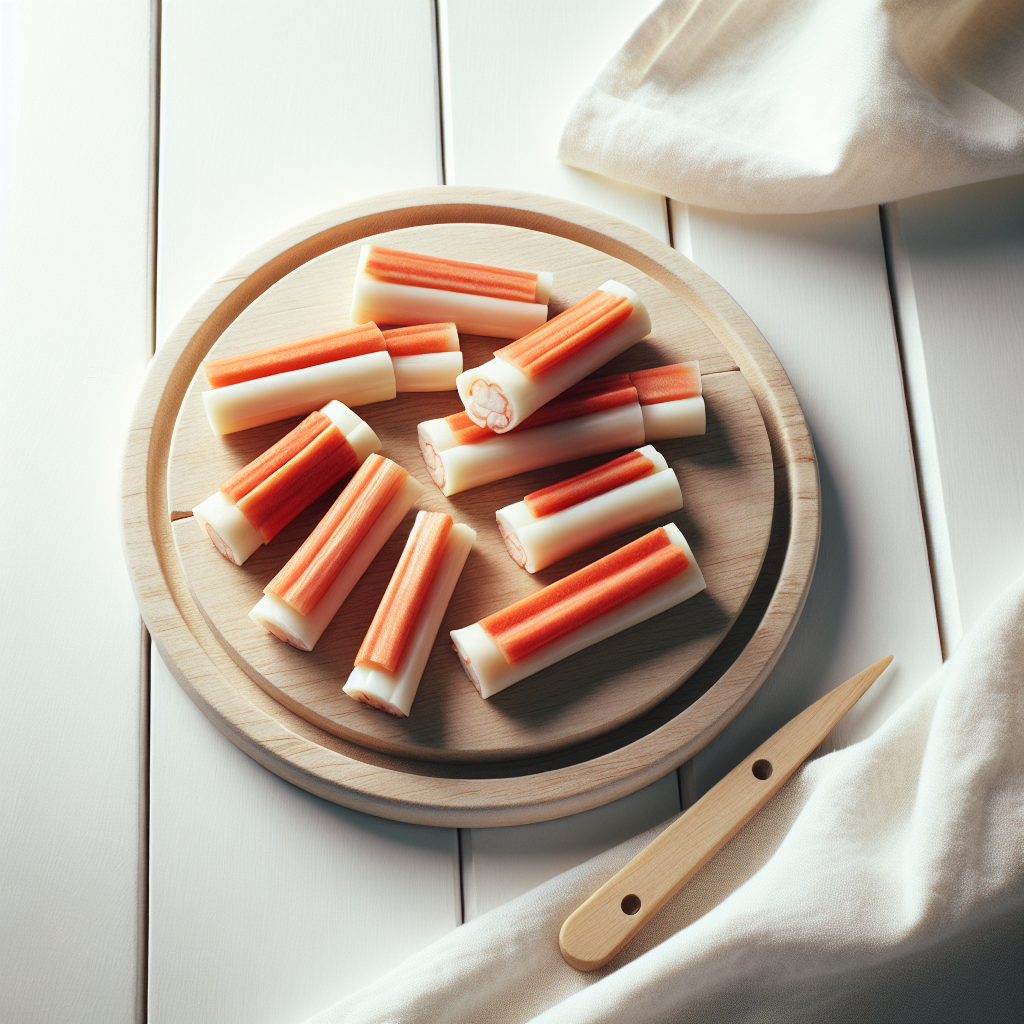
Baby-led weaning · age-specific guide
Crab stick soft for 6–8 months
Crab sticks can be introduced from around 6 months of age, as soon as your baby is ready to start solid foods. However, it's important to know that most crab sticks are imitation seafood made primarily from white fish (usually pollock or hake) with crab flavouring, though some contain small amounts of real crab. Always check the label for allergens and choose varieties lower in sodium when possible.
How to serve at 6–8 months
Offer soft crab sticks in finger-length strips about the size of two adult fingers placed together, making them easy for your baby to grasp in their palm with some sticking out to gnaw on. Remove any tough outer film or skin if present, as this can be harder to manage. You can serve them plain at room temperature or gently warmed, ensuring they remain soft and moist throughout.
Nutrition highlights
Crab sticks are a source of protein, which supports growth and development in babies. They also provide some B vitamins and are generally low in fat. However, many commercial crab sticks are quite high in sodium and contain additives, so they're best offered occasionally rather than as a regular protein source.
Lower-risk serving reminders
Soft crab sticks have a low choking risk due to their moist, tender texture that breaks apart easily in the mouth. Their pliable consistency makes them manageable for babies who are learning to chew and swallow solid foods.
Allergen information
Crab sticks typically contain fish and sometimes shellfish, both of which are common allergens. Even imitation crab sticks often contain small amounts of real crab extract or flavouring, so they should be treated as a shellfish allergen and introduced carefully, watching for signs of an allergic reaction such as hives, vomiting, or difficulty breathing.
Shellfish
Common questions
Are crab sticks real crab or imitation?
Most crab sticks sold in supermarkets are imitation seafood made from processed white fish (surimi) with crab flavouring, though many still contain small amounts of real crab extract. Always check the ingredients list for allergen information.
Are crab sticks too salty for babies?
Many crab sticks are quite high in sodium, so they're best offered occasionally rather than regularly. Look for lower-sodium varieties and avoid adding extra salt when serving them to your baby.
Can I serve crab sticks cold from the packet?
Yes, soft crab sticks are pre-cooked and can be served cold straight from the packet. You can also warm them gently if your baby prefers, but ensure they remain soft and easy to chew.
General feeding checklist
- Seat baby upright and stable for all meals.
- Model slow chewing and allow baby to control pace.
- Stop and reset if baby is upset, tired, or over-stuffed.
Readiness signs to check
- Baby can sit upright with minimal support during meals.
- Hands and mouth coordinate for bringing food to the mouth.
- Tongue-thrust reflex is reduced, so food is not immediately pushed out.
- Interest in self-feeding and opening mouth for food cues is visible.
Pause and seek advice if
- Coughing is persistent or distress does not settle quickly during meals.
- You notice repeated vomiting, rash, swelling, wheeze, or breathing changes after a food.
- Baby struggles with swallowing progression over multiple meals despite texture adjustments.
- There is a known medical condition affecting feeding, growth, or airway safety.
Other ages: 9–11 months · 12–24 months