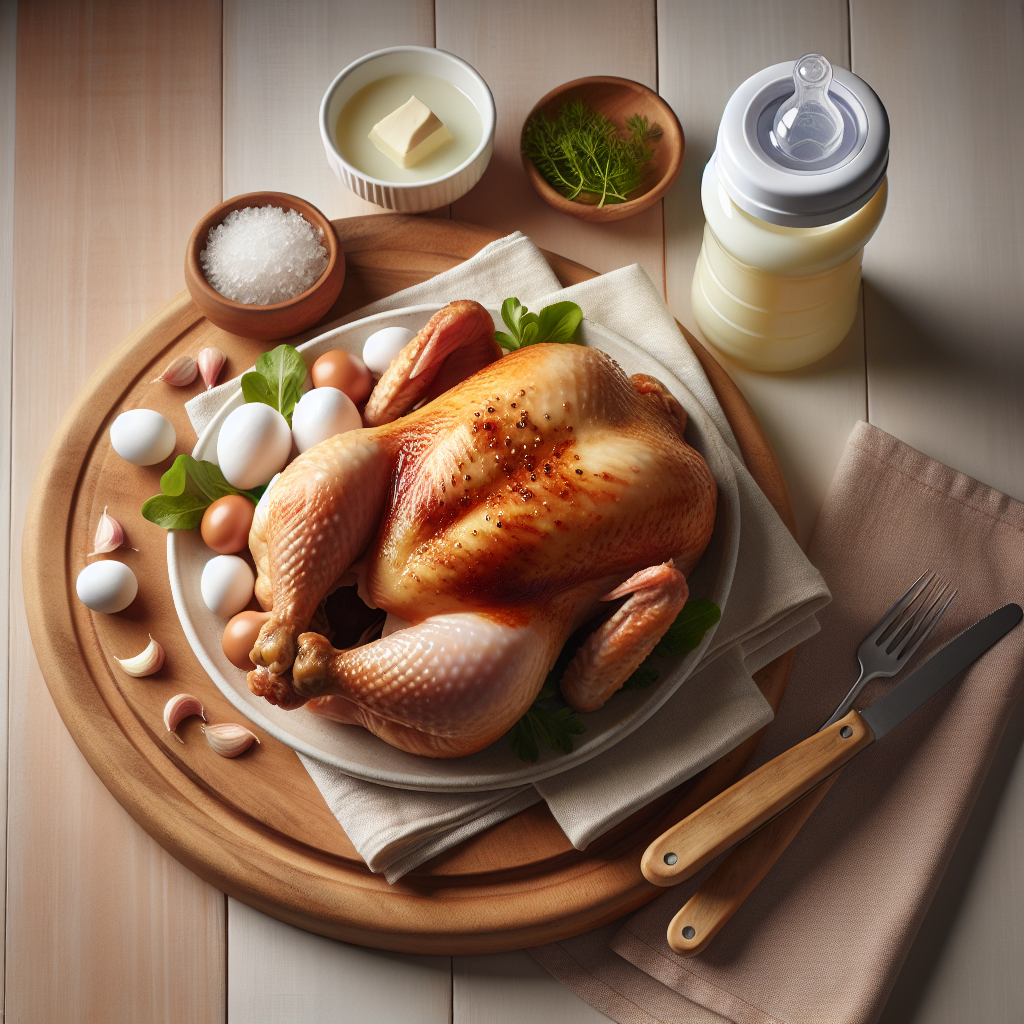
Baby-led weaning · age-specific guide
Cornish hen for 6–8 months
Cornish hen can be introduced as soon as your baby is ready to start solid foods, which is typically around 6 months of age. As with all poultry, ensure the meat is fully cooked to a safe internal temperature and served in an age-appropriate size and texture. Always check carefully for small bones, which can be present in Cornish hen, before offering it to your baby.
How to serve at 6–8 months
Cook Cornish hen until fully tender, then remove the skin and check very carefully for any small bones. Shred the meat into fine strands or cut it into finger-length strips about the size of two adult fingers placed together. You can serve the strips on their own or alongside mashed vegetables to help with grip and moisture.
Nutrition highlights
Cornish hen is an excellent source of protein, which supports your baby's growth, muscle development, and immune function. It also provides B vitamins, including niacin and B6, which help convert food into energy and support brain development. Additionally, Cornish hen contains zinc and selenium, minerals that play important roles in immune health and cell function.
Lower-risk serving reminders
Cornish hen presents a low choking risk when prepared properly as tender, moist pieces or strips without skin. The risk increases if the meat is dry, overcooked, or served in large chunks, so keeping it moist and appropriately sized is important.
Allergen introduction checklist
Cornish hen is not a common allergen and does not appear on the major allergen lists. Allergies to poultry are rare, though they can occur in some individuals.
Common questions
Do I need to remove the skin from Cornish hen before serving it to my baby?
Yes, it is best to remove the skin as it can be tough and difficult for babies to chew and swallow safely. Serve only the tender, cooked meat.
How can I make sure Cornish hen stays moist for my baby?
Cook the hen gently using methods like roasting or braising, and avoid overcooking. You can also serve it with a small amount of low-sodium broth or a healthy fat like olive oil to keep it moist.
Is Cornish hen better than chicken for babies?
Cornish hen and chicken are nutritionally similar, both offering high-quality protein and essential vitamins. The choice comes down to personal preference and availability.
General feeding checklist
- Seat baby upright and stable for all meals.
- Model slow chewing and allow baby to control pace.
- Stop and reset if baby is upset, tired, or over-stuffed.
Readiness signs to check
- Baby can sit upright with minimal support during meals.
- Hands and mouth coordinate for bringing food to the mouth.
- Tongue-thrust reflex is reduced, so food is not immediately pushed out.
- Interest in self-feeding and opening mouth for food cues is visible.
Pause and seek advice if
- Coughing is persistent or distress does not settle quickly during meals.
- You notice repeated vomiting, rash, swelling, wheeze, or breathing changes after a food.
- Baby struggles with swallowing progression over multiple meals despite texture adjustments.
- There is a known medical condition affecting feeding, growth, or airway safety.
Other ages: 9–11 months · 12–24 months