Baby-led weaning · age-specific guide
Corn on the cob for 12–24 months
Corn on the cob can be introduced as soon as your baby is ready to start solid foods, which is generally around 6 months of age. When properly prepared until very soft, it offers a wonderful opportunity for babies to practise their biting and gnawing skills. Always ensure the corn is cooked until tender enough to mash easily between your fingers before serving.
How to serve at 12–24 months
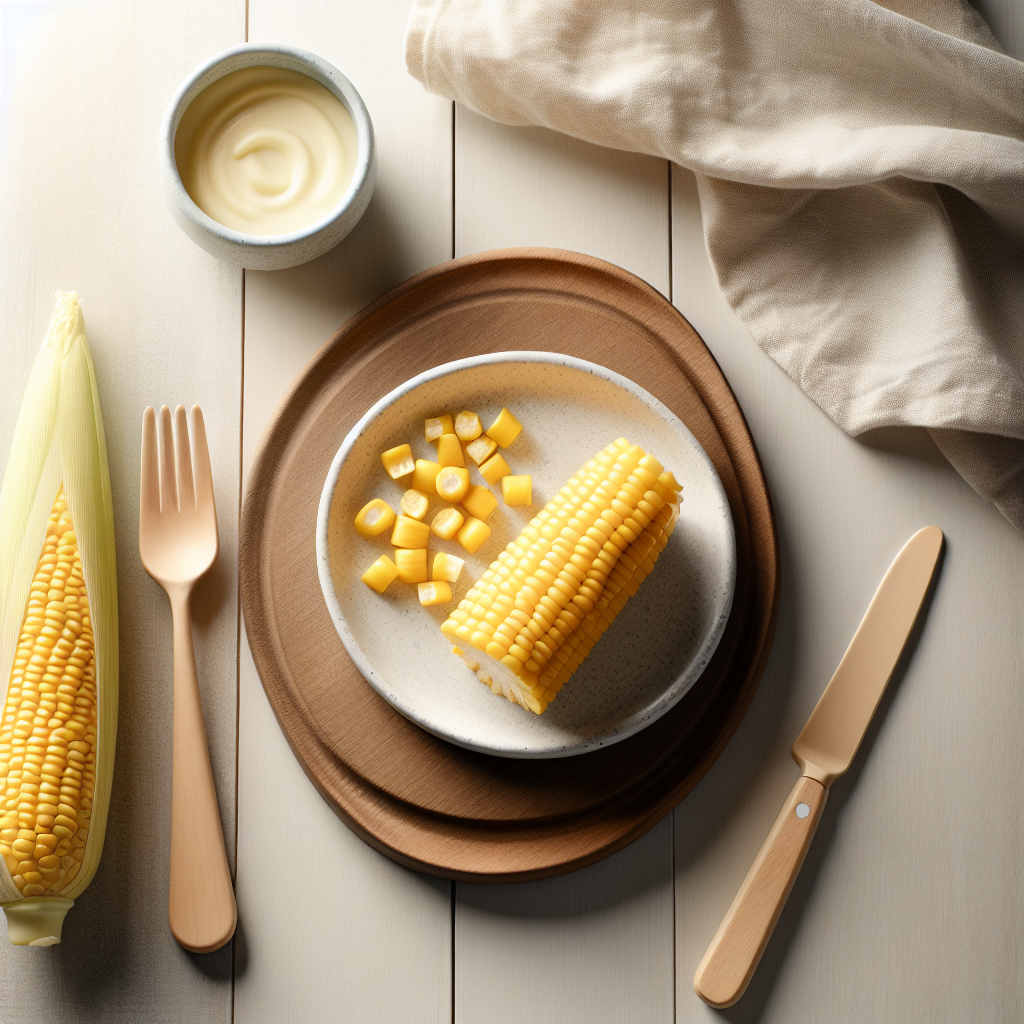
Continue offering corn on the cob cooked until soft, adjusting the size to match your toddler's developing chewing and biting skills. You may serve larger portions of the cob as your child can now hold and rotate it more skilfully. Once your toddler demonstrates mature chewing skills (usually after 18 months), you can begin offering individual kernels that have been mashed slightly or cut in half lengthways to reduce choking risk.
Nutrition highlights
Corn on the cob provides fibre to support healthy digestion, along with B vitamins that help the body convert food into energy. It also contains vitamin C to support iron absorption and immune function, plus small amounts of minerals like magnesium and potassium. Whilst corn is a nutritious whole food, it is not particularly high in protein or iron compared to other vegetables.
Lower-risk serving reminders
When cooked until very soft, corn on the cob presents a low choking risk because babies can safely gum and scrape the kernels from the cob without breaking off hard pieces. The key is ensuring the corn is tender enough that individual kernels mash easily under gentle pressure.
Allergen introduction checklist
Corn is not considered a common allergen and reactions to it are quite rare. Whilst corn allergies do exist, they are uncommon in babies and young children.
Common questions
Can babies choke on corn on the cob?
When corn is cooked until very soft and served on the cob, the choking risk is low, as babies gum and scrape the kernels rather than biting off large pieces. Avoid offering loose kernels to babies under 12 months, as these present a higher choking risk.
Should I remove corn kernels from the cob for my baby?
For babies under 12 months, it's safer to serve corn still attached to the cob, as loose kernels are a choking hazard. Once your child is over 12 months and has well-developed chewing skills, you can begin offering individual kernels that have been mashed or cut in half lengthways.
How do I know if corn on the cob is soft enough for my baby?
The corn should be tender enough to mash easily between your thumb and forefinger with minimal pressure. If you need to apply firm pressure or the kernels feel at all firm, continue cooking until they reach a very soft consistency.
General feeding checklist
- Seat baby upright and stable for all meals.
- Model slow chewing and allow baby to control pace.
- Stop and reset if baby is upset, tired, or over-stuffed.
Readiness signs to check
- Baby can sit upright with minimal support during meals.
- Hands and mouth coordinate for bringing food to the mouth.
- Tongue-thrust reflex is reduced, so food is not immediately pushed out.
- Interest in self-feeding and opening mouth for food cues is visible.
Pause and seek advice if
- Coughing is persistent or distress does not settle quickly during meals.
- You notice repeated vomiting, rash, swelling, wheeze, or breathing changes after a food.
- Baby struggles with swallowing progression over multiple meals despite texture adjustments.
- There is a known medical condition affecting feeding, growth, or airway safety.
Other ages: 6–8 months · 9–11 months