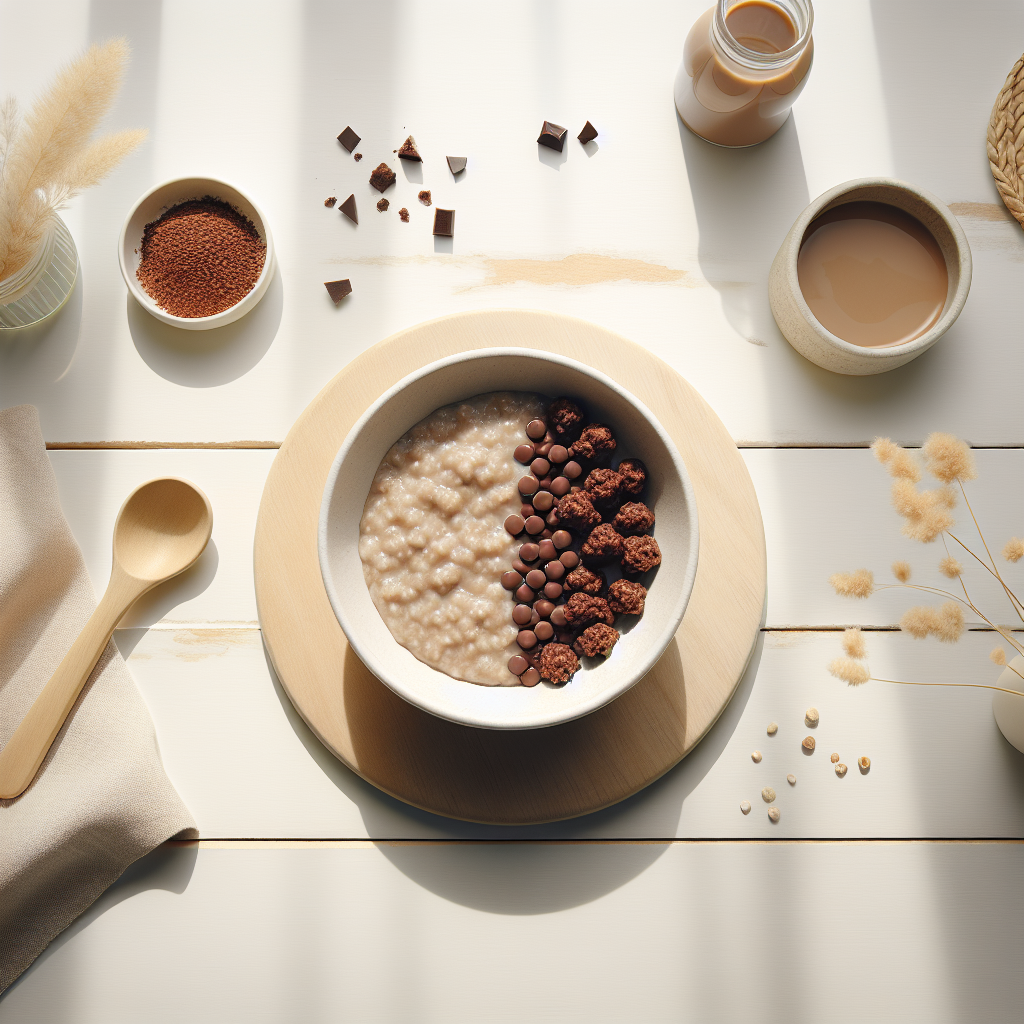
Baby-led weaning · age-specific guide
Cocoa trace in porridge for 9–11 months
Babies can be introduced to porridge with a trace amount of cocoa from around 6 months of age, once they are ready to start solid foods and showing signs of readiness for baby-led weaning. Cocoa powder is derived from cacao beans and contains small amounts of caffeine, so it should be offered only in very small quantities—a light dusting or trace amount mixed into porridge is appropriate. Always choose unsweetened cocoa powder and avoid chocolate products with added sugars or milk.
How to serve at 9–11 months
Continue to offer porridge with a trace of cocoa as a soft, spoonable food or spread onto toast fingers for independent eating. As your baby develops their pincer grasp, you can also serve the porridge in a small open cup or bowl and encourage self-feeding with a spoon. Keep the cocoa quantity minimal and ensure the porridge remains thick enough to stick to a spoon but soft enough to swallow easily.
Nutrition highlights
Cocoa powder is a source of iron, which supports healthy blood development and cognitive function in babies, and also provides magnesium and antioxidants. When mixed into iron-fortified porridge, it can complement the existing iron content and introduce a subtle, earthy flavour that helps expand a baby's palate. Keep in mind that cocoa contains trace amounts of caffeine and theobromine, so it should be used sparingly in baby foods.
Lower-risk serving reminders
Porridge with a trace of cocoa presents a low choking risk because the cocoa is finely ground and fully incorporated into a soft, smooth or slightly textured base that babies can easily move around in their mouths and swallow. The consistency of porridge is naturally easy to manage for beginning eaters.
Allergen introduction checklist
Cocoa powder itself is not classified as a common allergen in the UK or US. However, some cocoa products may be processed in facilities that handle common allergens such as milk, tree nuts, or peanuts, so it is worth checking the label if your baby has known allergies or a family history of allergy.
Common questions
Is cocoa safe for babies under one year old
Yes, a trace amount of unsweetened cocoa powder mixed into porridge is safe for babies from 6 months, though it should be used sparingly due to its small caffeine content.
How much cocoa can I add to my baby's porridge
A light dusting or around an eighth of a teaspoon is sufficient for babies, just enough to add a subtle flavour without introducing too much caffeine or bitterness.
Does cocoa in porridge count as iron-rich for babies
Yes, unsweetened cocoa powder contains iron, and when added to iron-fortified porridge it contributes to your baby's overall iron intake, which is important for development.
General feeding checklist
- Seat baby upright and stable for all meals.
- Model slow chewing and allow baby to control pace.
- Stop and reset if baby is upset, tired, or over-stuffed.
Readiness signs to check
- Baby can sit upright with minimal support during meals.
- Hands and mouth coordinate for bringing food to the mouth.
- Tongue-thrust reflex is reduced, so food is not immediately pushed out.
- Interest in self-feeding and opening mouth for food cues is visible.
Pause and seek advice if
- Coughing is persistent or distress does not settle quickly during meals.
- You notice repeated vomiting, rash, swelling, wheeze, or breathing changes after a food.
- Baby struggles with swallowing progression over multiple meals despite texture adjustments.
- There is a known medical condition affecting feeding, growth, or airway safety.
Other ages: 6–8 months · 12–24 months