Baby-led weaning · age-specific guide
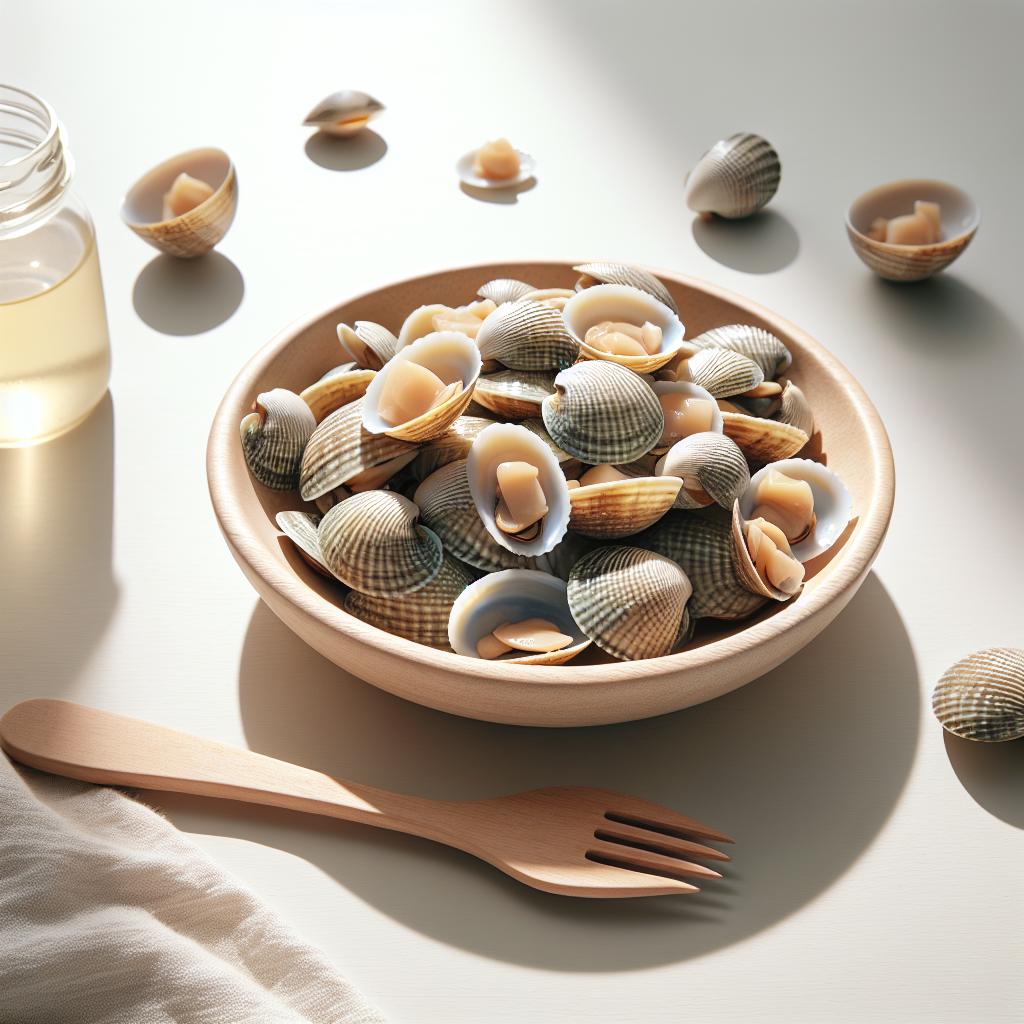
Clam chopped for 6–8 months
Chopped clam may be introduced as soon as your baby is ready to start solid foods, which is generally around 6 months of age. As clams are a common allergen, it's important to introduce them when your baby is healthy and at home, starting with a small amount and watching for any signs of a reaction. Always ensure clams are fully cooked until tender before offering them to your baby.
How to serve at 6–8 months
Cook clams fully until tender, then shred the meat into fine strands or offer finger-length strips that your baby can palm and gnaw on. Remove any tough or rubbery outer skin or mantle if present, as these can be difficult for young babies to manage. You can serve the shredded clam meat on its own, mixed into mashed vegetables, or stirred into baby-friendly risotto or porridge for added flavour and iron.
Nutrition highlights
Clams are an excellent source of iron, which supports healthy brain development and helps prevent iron deficiency anaemia in babies. They also provide high-quality protein for growth and development, along with vitamin B12, zinc, and omega-3 fatty acids. These nutrients are particularly valuable during the first year when babies have high nutritional needs for their rapid growth.
Lower-risk serving reminders
Chopped clam carries a low choking risk when properly cooked until tender and prepared in age-appropriate sizes. The soft, yielding texture breaks apart easily in the mouth, making it safer for babies who are learning to chew.
Allergen information
Clams are classified as shellfish, which is a common food allergen. When introducing clams for the first time, offer a small amount and watch for signs of an allergic reaction, which may include hives, swelling, vomiting, or difficulty breathing.
Shellfish
Common questions
Are clams safe for babies with a shellfish allergy in the family?
A family history of shellfish allergy does not mean you should avoid clams, but it may increase risk. Introduce clams when your baby is healthy and at home, and consult your GP or health visitor if you have concerns.
Do I need to remove anything from chopped clams before serving?
Yes, always check carefully for any remaining shell fragments or grit before serving clams to your baby. Rinse thoroughly and ensure the clams are fully cooked until tender.
Can I serve canned clams to my baby?
Canned clams can be offered to babies, but choose varieties packed in water without added salt or seasonings. Rinse thoroughly before serving to reduce sodium content.
General feeding checklist
- Seat baby upright and stable for all meals.
- Model slow chewing and allow baby to control pace.
- Stop and reset if baby is upset, tired, or over-stuffed.
Readiness signs to check
- Baby can sit upright with minimal support during meals.
- Hands and mouth coordinate for bringing food to the mouth.
- Tongue-thrust reflex is reduced, so food is not immediately pushed out.
- Interest in self-feeding and opening mouth for food cues is visible.
Pause and seek advice if
- Coughing is persistent or distress does not settle quickly during meals.
- You notice repeated vomiting, rash, swelling, wheeze, or breathing changes after a food.
- Baby struggles with swallowing progression over multiple meals despite texture adjustments.
- There is a known medical condition affecting feeding, growth, or airway safety.
Other ages: 9–11 months · 12–24 months