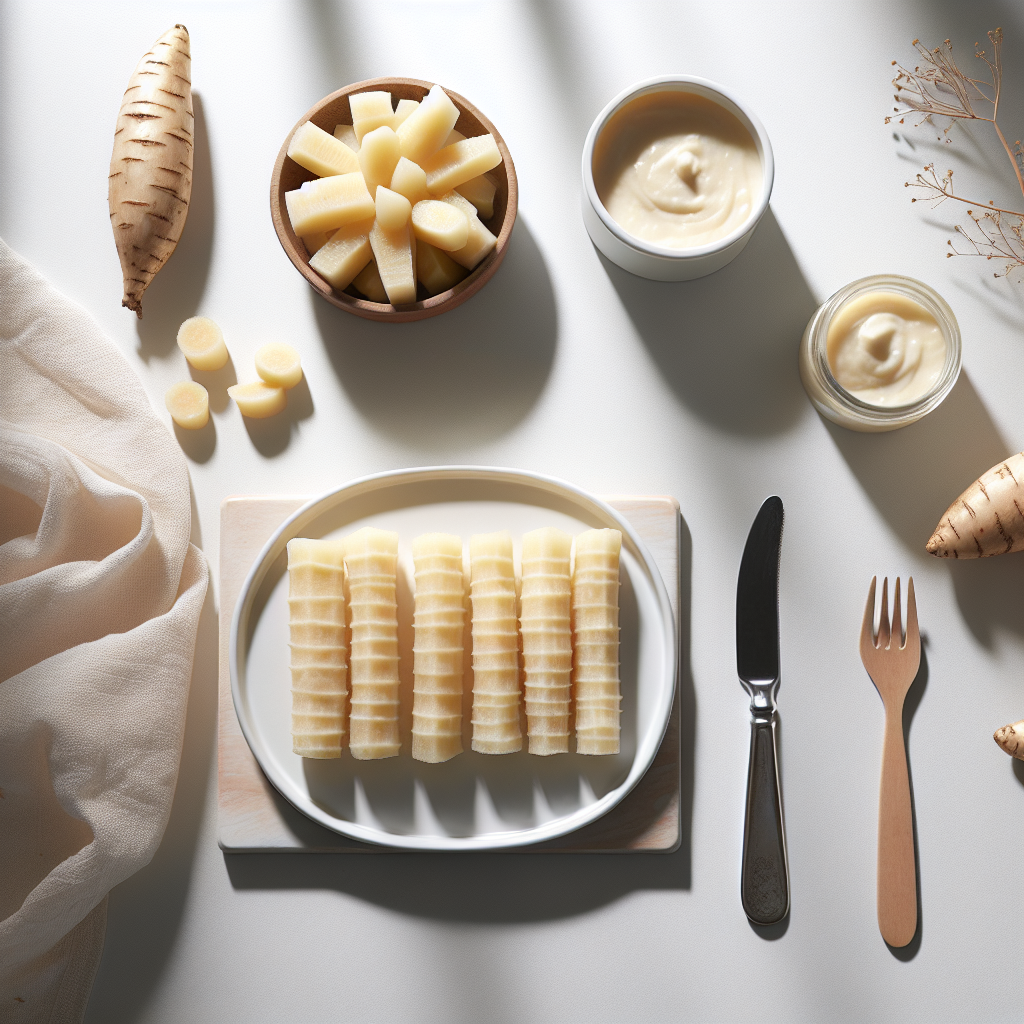
Baby-led weaning · age-specific guide
Cassava cooked for 12–24 months
Cassava may be introduced as soon as your baby is ready to start solids, which is generally around 6 months of age. When preparing cassava for babies, it must always be peeled and cooked thoroughly until very soft, as raw cassava contains naturally occurring compounds that can be harmful if not properly prepared. Cassava is a starchy root vegetable that can be a nourishing part of your baby's diet when served safely.
How to serve at 12–24 months
Offer soft cooked cassava in bite-sized pieces that match your toddler's chewing ability, adjusting the size as their skills develop. Cassava can be served as part of family meals, such as in soups, stews, or alongside proteins and vegetables. Continue to ensure it is thoroughly cooked and avoid adding salt or excess seasoning.
Nutrition highlights
Cassava is a good source of carbohydrates, providing energy to fuel your baby's rapid growth and development. It also contains vitamin C, which supports immune function and helps with iron absorption from other foods, as well as folate and small amounts of potassium. While nutritious, cassava is relatively low in protein and iron, so it's best served alongside other nutrient-dense foods as part of a varied diet.
Lower-risk serving reminders
Cassava cooked until very soft presents a low choking risk because it becomes tender enough to mash easily with gentle pressure and breaks down readily in your baby's mouth. The key is ensuring it is thoroughly cooked through and served in age-appropriate sizes that your baby can safely manage.
Allergen introduction checklist
Cassava is not a common allergen and allergic reactions to it are rare. As with all new foods, it's sensible to introduce cassava on its own at first and watch for any signs of a reaction over the following few days.
Common questions
Does cassava need to be cooked before giving it to my baby?
Yes, cassava must always be peeled and cooked thoroughly before serving to your baby, as raw cassava contains compounds that can be harmful if consumed. Cooking until very soft eliminates these concerns and makes cassava safe and easy to eat.
Can I serve cassava chips or crisps to my baby?
It's best to avoid cassava chips or crisps for babies and toddlers, as they are often high in salt and can be hard and brittle, which increases choking risk. Stick to soft, cooked cassava prepared at home without added salt.
Is cassava the same as yuca?
Yes, cassava and yuca refer to the same starchy root vegetable. The terms are used interchangeably depending on the region, with yuca more commonly used in Latin American communities.
General feeding checklist
- Seat baby upright and stable for all meals.
- Model slow chewing and allow baby to control pace.
- Stop and reset if baby is upset, tired, or over-stuffed.
Readiness signs to check
- Baby can sit upright with minimal support during meals.
- Hands and mouth coordinate for bringing food to the mouth.
- Tongue-thrust reflex is reduced, so food is not immediately pushed out.
- Interest in self-feeding and opening mouth for food cues is visible.
Pause and seek advice if
- Coughing is persistent or distress does not settle quickly during meals.
- You notice repeated vomiting, rash, swelling, wheeze, or breathing changes after a food.
- Baby struggles with swallowing progression over multiple meals despite texture adjustments.
- There is a known medical condition affecting feeding, growth, or airway safety.
Other ages: 6–8 months · 9–11 months