Baby-led weaning · age-specific guide
Carrot for 12–24 months
Carrot can be introduced as soon as your baby is ready to start solid foods, which is typically around 6 months of age. Always cook carrots until very soft for young babies, as raw or undercooked carrot is a choking hazard. When prepared properly, carrot is a nutritious and manageable first food for baby-led weaning.
How to serve at 12–24 months
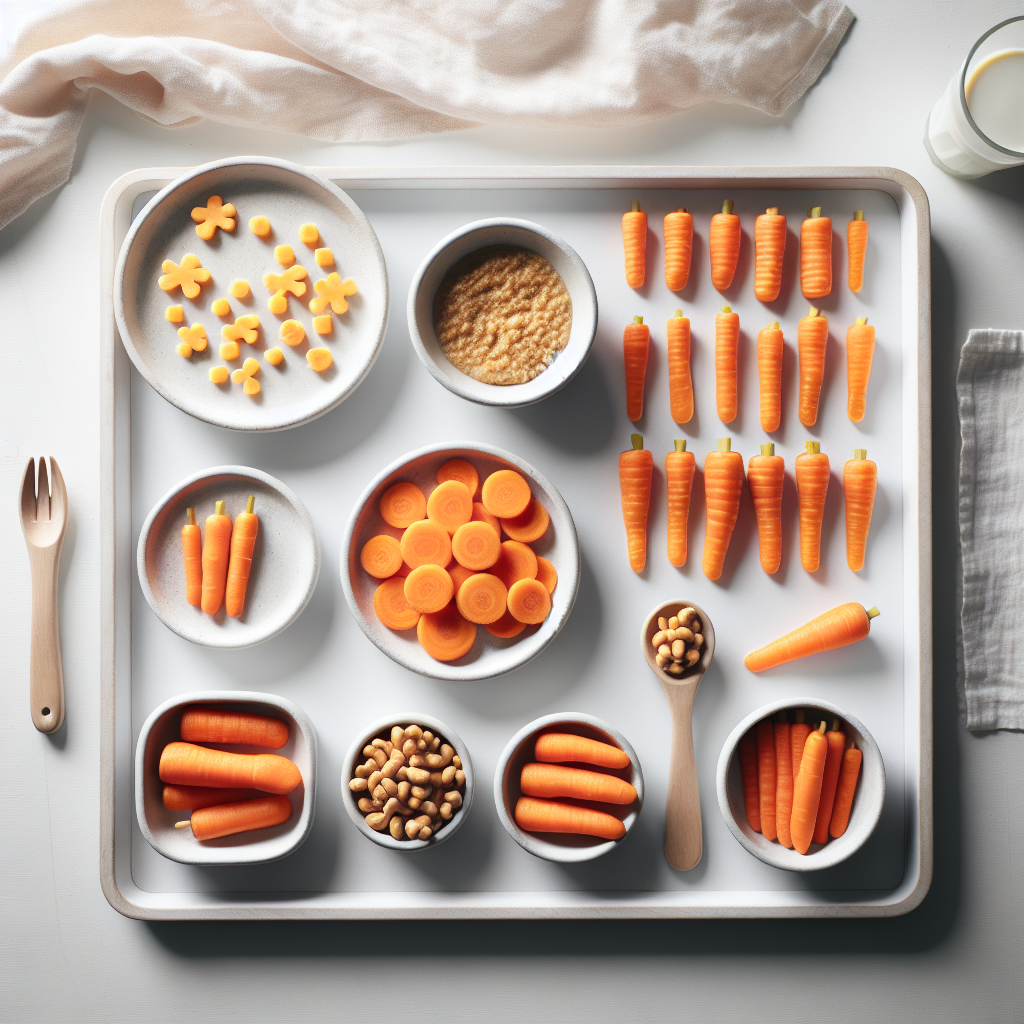
Serve soft cooked carrot in bite-sized pieces appropriate to your toddler's chewing ability, such as coins, cubes, or short sticks. Continue to cook carrot thoroughly, though it can be slightly firmer than for younger babies as chewing skills improve. Avoid raw carrot until your child is at least 3 to 4 years old and can chew thoroughly.
Nutrition highlights
Carrots are an excellent source of beta-carotene, which the body converts to vitamin A to support healthy vision, immune function, and skin. They also provide fibre to support digestion and contain smaller amounts of vitamins K and C. The bright orange colour makes them visually appealing to babies exploring new foods.
Lower-risk serving reminders
Carrot has a low choking risk when cooked until very soft and served in age-appropriate sizes. Raw or undercooked carrot is firm and presents a significant choking hazard, so proper cooking is essential to make it safe for babies to gum and chew.
Allergen introduction checklist
Carrot is not a common allergen and allergic reactions are rare. Some babies with pollen allergies may develop oral allergy syndrome when introduced to carrots, though this is uncommon in infants.
Common questions
Do carrots need to be peeled for babies?
Peeling is not necessary if you wash carrots thoroughly, though organic carrots with thin skins are easiest to clean. Peeling can make them slightly smoother for young babies to handle.
Can I give my baby raw carrot?
No, raw carrot is a choking hazard for babies and young children. Always cook carrot until very soft before offering it to babies under 12 months, and continue cooking it well for toddlers.
Why does carrot appear in my baby's nappy unchanged?
It is common to see pieces of orange carrot in your baby's nappy, as their digestive system is still maturing. This does not mean they are not absorbing nutrients from the carrot.
General feeding checklist
- Seat baby upright and stable for all meals.
- Model slow chewing and allow baby to control pace.
- Stop and reset if baby is upset, tired, or over-stuffed.
Readiness signs to check
- Baby can sit upright with minimal support during meals.
- Hands and mouth coordinate for bringing food to the mouth.
- Tongue-thrust reflex is reduced, so food is not immediately pushed out.
- Interest in self-feeding and opening mouth for food cues is visible.
Pause and seek advice if
- Coughing is persistent or distress does not settle quickly during meals.
- You notice repeated vomiting, rash, swelling, wheeze, or breathing changes after a food.
- Baby struggles with swallowing progression over multiple meals despite texture adjustments.
- There is a known medical condition affecting feeding, growth, or airway safety.
Other ages: 6–8 months · 9–11 months