Baby-led weaning · age-specific guide
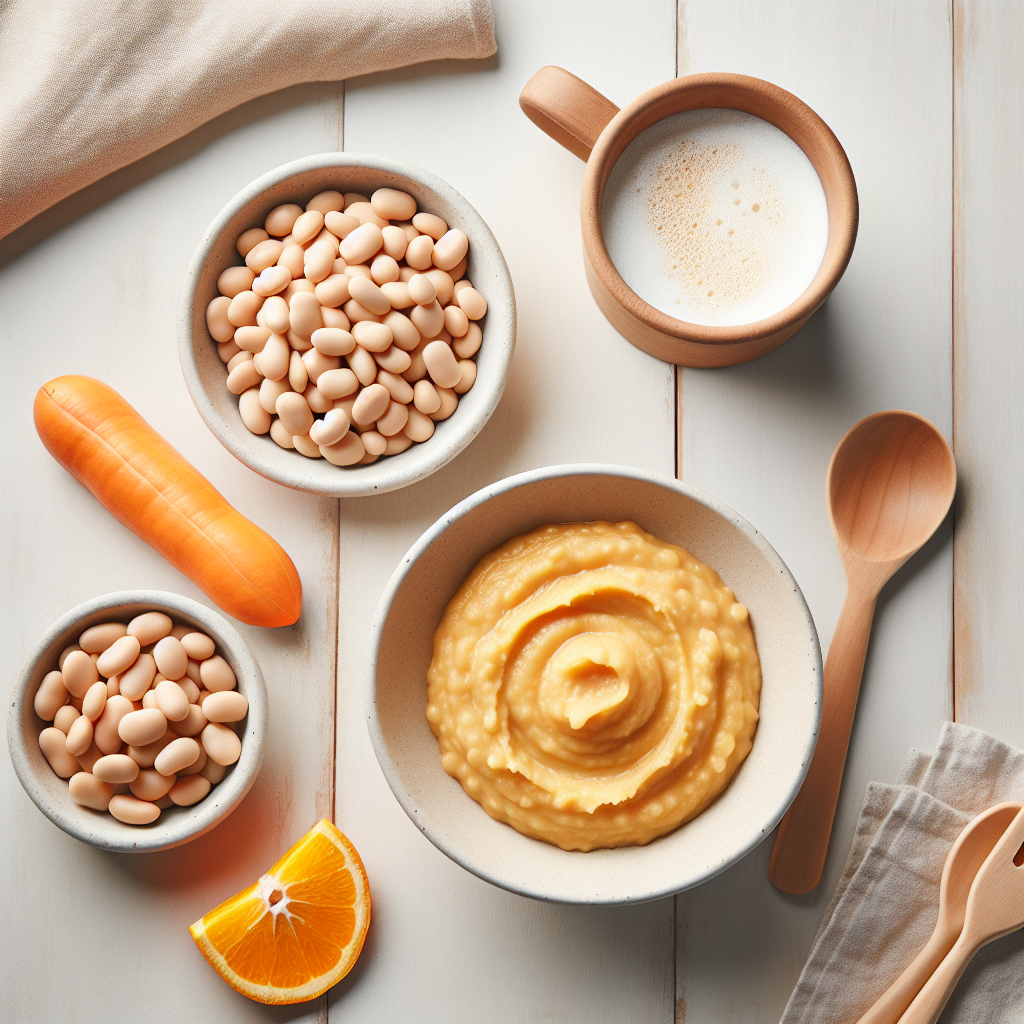
Butter bean mashed for 12–24 months
Mashed butter beans can be introduced as soon as your baby is ready to start solid foods, which is generally around 6 months of age. Butter beans are a nutritious legume that provide important nutrients for growth and development. Always ensure the beans are fully cooked until very soft and mashed to an appropriate texture for your baby's age and stage.
How to serve at 12–24 months
Mashed butter beans can continue to be served as a dip, spread, or mixed into family meals like pasta, soups, and stews. As your toddler's utensil skills improve, offer mashed butter beans in a bowl with a spoon for self-feeding practice. You can also introduce slightly less mashed beans with a coarser texture, though they should still be soft and easy to chew.
Nutrition highlights
Butter beans are an excellent source of plant-based protein and iron, both crucial for your baby's growth and development. They also provide fibre to support healthy digestion and a range of B vitamins including folate. The iron in butter beans is non-haem iron, so serving them alongside vitamin C-rich foods can help improve absorption.
Lower-risk serving reminders
Mashed butter beans present a low choking risk because they are soft, smooth, and easy for babies to move around in the mouth and swallow. The mashing process breaks down the skin and firm interior, creating a manageable texture that does not pose the same risk as whole or firm beans.
Allergen introduction checklist
Butter beans are not considered a common allergen and are generally well tolerated by most babies. As with any new food, introduce butter beans on their own and watch for signs of an allergic reaction, though reactions are rare.
Common questions
Do I need to remove the skins from butter beans before mashing them?
For younger babies aged 6 to 8 months, it's helpful to remove any loose skins after mashing, as they can be difficult to manage. As your baby's oral skills develop, the skins become less of a concern when the beans are well mashed.
Can I use tinned butter beans for baby-led weaning?
Yes, tinned butter beans are convenient and safe to use. Choose varieties with no added salt or rinse them thoroughly under running water to reduce sodium content before mashing.
How can I make mashed butter beans easier for my baby to pick up?
Mix mashed butter beans with a small amount of their usual milk, olive oil, or mashed avocado to create a spreadable consistency that can be loaded onto strips of toast or a preloaded spoon. You can also shape the mash into small patties or balls that are easier for little hands to grasp.
General feeding checklist
- Seat baby upright and stable for all meals.
- Model slow chewing and allow baby to control pace.
- Stop and reset if baby is upset, tired, or over-stuffed.
Readiness signs to check
- Baby can sit upright with minimal support during meals.
- Hands and mouth coordinate for bringing food to the mouth.
- Tongue-thrust reflex is reduced, so food is not immediately pushed out.
- Interest in self-feeding and opening mouth for food cues is visible.
Pause and seek advice if
- Coughing is persistent or distress does not settle quickly during meals.
- You notice repeated vomiting, rash, swelling, wheeze, or breathing changes after a food.
- Baby struggles with swallowing progression over multiple meals despite texture adjustments.
- There is a known medical condition affecting feeding, growth, or airway safety.
Other ages: 6–8 months · 9–11 months