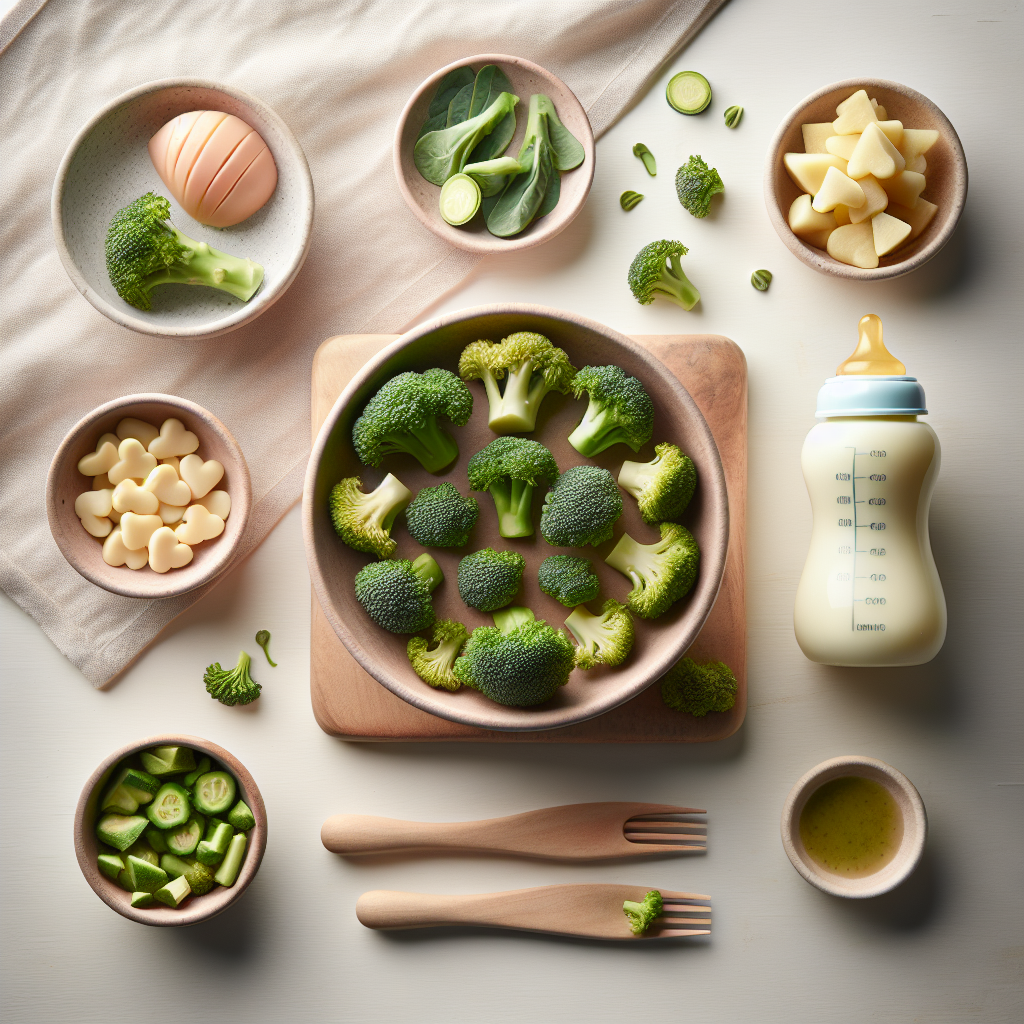
Baby-led weaning · age-specific guide
Broccoli for 6–8 months
Broccoli may be offered as soon as your baby is ready to start solid foods, which is generally around 6 months of age. When prepared properly—steamed or roasted until very soft—broccoli is a wonderful early food that provides essential nutrients and opportunities for self-feeding. Always ensure the florets and stalks are soft enough to squish easily between your fingers before serving.
How to serve at 6–8 months
Steam or roast broccoli florets and stalks until very soft—they should squish easily between your fingers. Serve the stalk in finger-length strips about the width of two adult fingers, or offer a whole floret with enough stalk attached for baby to grasp while the floret pokes out the top of their fist. You can also serve large floret wedges that are easy to hold and explore.
Nutrition highlights
Broccoli is rich in iron, which supports healthy blood development and helps prevent anaemia in growing babies. It also provides vitamin C to boost iron absorption, fibre for digestive health, and folate for cell growth. The florets and stalks contain calcium and vitamin K, which contribute to strong bones and overall development.
Lower-risk serving reminders
Broccoli has a low choking risk when cooked until very soft and served appropriately for your baby's age. The florets naturally break apart when gummed or chewed, and the stalks can be cut into safe shapes that are easy for babies to grasp and manage.
Allergen introduction checklist
Broccoli is not a common allergen and is considered safe for most babies. Allergic reactions to broccoli are rare, though some babies may experience mild digestive discomfort when first trying cruciferous vegetables.
Common questions
Does broccoli need to be peeled for baby-led weaning
No, broccoli does not need to be peeled. Both the florets and stalks are safe to serve with the skin on, as long as they are cooked until very soft and age-appropriately prepared.
Can I serve raw broccoli to my baby
Raw broccoli is too hard for babies and young toddlers and presents a choking risk. Always cook broccoli until very soft before offering it to your child.
Why does broccoli make my baby gassy
Broccoli contains raffinose, a complex sugar that can cause gas as it ferments during digestion. This is normal and typically decreases as your baby's digestive system matures and adapts to new foods.
General feeding checklist
- Seat baby upright and stable for all meals.
- Model slow chewing and allow baby to control pace.
- Stop and reset if baby is upset, tired, or over-stuffed.
Readiness signs to check
- Baby can sit upright with minimal support during meals.
- Hands and mouth coordinate for bringing food to the mouth.
- Tongue-thrust reflex is reduced, so food is not immediately pushed out.
- Interest in self-feeding and opening mouth for food cues is visible.
Pause and seek advice if
- Coughing is persistent or distress does not settle quickly during meals.
- You notice repeated vomiting, rash, swelling, wheeze, or breathing changes after a food.
- Baby struggles with swallowing progression over multiple meals despite texture adjustments.
- There is a known medical condition affecting feeding, growth, or airway safety.
Other ages: 9–11 months · 12–24 months