Baby-led weaning · age-specific guide
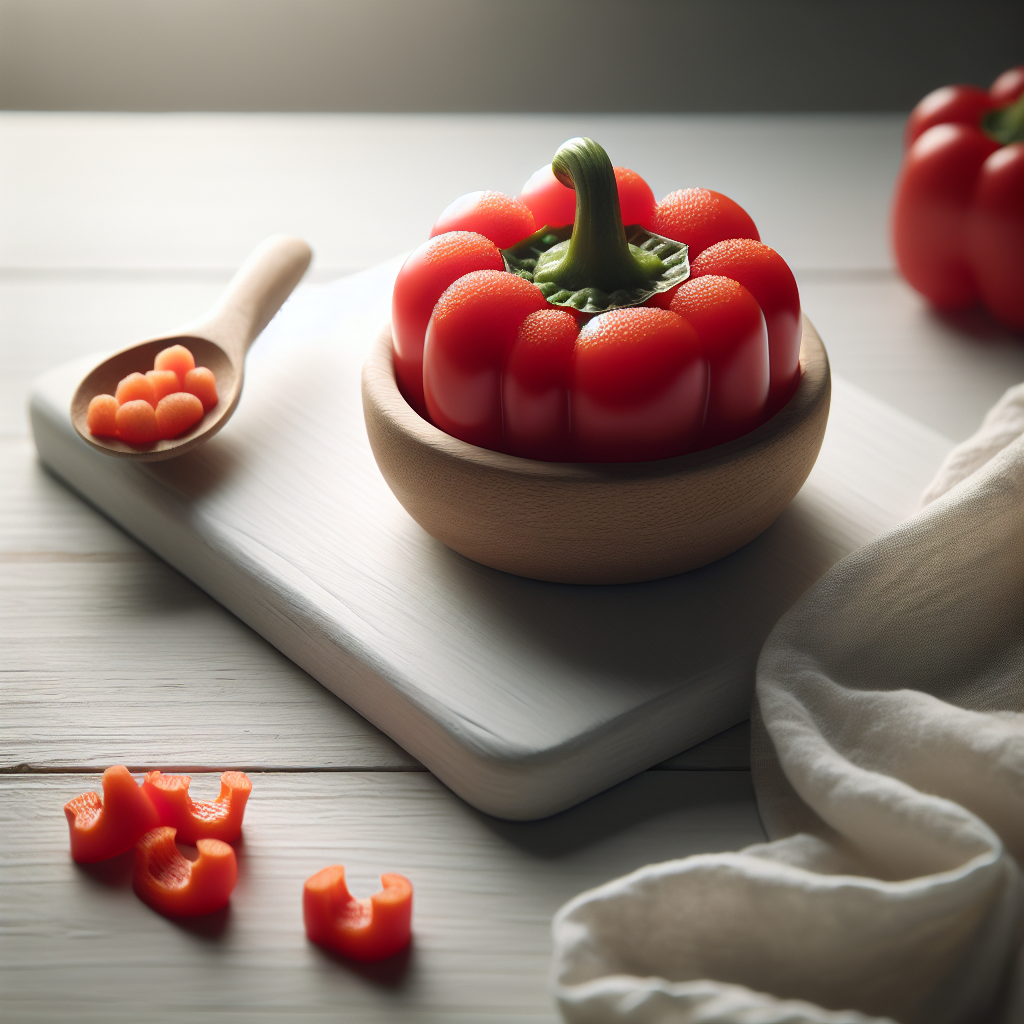
Bell pepper red for 6–8 months
Red bell pepper may be introduced as soon as your baby is ready to start solids, which is generally around 6 months of age. When prepared correctly, red bell pepper is soft and easy for babies to gum, making it a lovely early food. Always ensure the pepper is cooked until very soft to reduce any risk and support safe self-feeding.
How to serve at 6–8 months
Steam or roast red bell pepper until very soft and tender enough to squish easily between your fingers. Cut the pepper into finger-length strips (about the length of your index finger) or large wedges that your baby can grip in their fist with some sticking out to gnaw on. You can serve the strips on their own or offer a large quarter of a roasted pepper that baby can hold and gum along the soft flesh.
Nutrition highlights
Red bell peppers are exceptionally high in vitamin C, which supports your baby's immune system and helps their body absorb iron from other foods. They also provide vitamin A, which is important for healthy vision and immune function, as well as antioxidants that support overall development. The naturally sweet flavour of red peppers often appeals to babies and can help expand their palate.
Lower-risk serving reminders
Red bell pepper has a low choking risk when cooked until very soft, as it becomes tender and easy for babies to break down with their gums. The key is ensuring the pepper is well-cooked and served in appropriate sizes that match your baby's developmental stage.
Allergen introduction checklist
Red bell pepper is not a common allergen and is generally well-tolerated by babies. As with any new food, introduce red bell pepper on its own and watch for any signs of an allergic reaction, though these are rare with peppers.
Common questions
Should I remove the skin from red bell pepper for my baby?
The skin is fine to leave on when the pepper is thoroughly cooked until very soft, as it becomes tender and digestible. If your baby struggles with the skin, you can peel it off after roasting or steaming.
Can I give my baby raw red bell pepper?
Raw bell pepper is too hard and crunchy for babies under 12 months and poses a choking risk. Always cook red bell pepper until very soft for babies, and wait until your toddler has well-developed chewing skills before offering raw pieces.
Why choose red bell pepper over green or yellow?
Red bell peppers are sweeter and more nutrient-dense than green peppers, containing significantly more vitamin C and vitamin A. The milder, sweeter taste also tends to be more appealing to babies who are just starting solids.
General feeding checklist
- Seat baby upright and stable for all meals.
- Model slow chewing and allow baby to control pace.
- Stop and reset if baby is upset, tired, or over-stuffed.
Readiness signs to check
- Baby can sit upright with minimal support during meals.
- Hands and mouth coordinate for bringing food to the mouth.
- Tongue-thrust reflex is reduced, so food is not immediately pushed out.
- Interest in self-feeding and opening mouth for food cues is visible.
Pause and seek advice if
- Coughing is persistent or distress does not settle quickly during meals.
- You notice repeated vomiting, rash, swelling, wheeze, or breathing changes after a food.
- Baby struggles with swallowing progression over multiple meals despite texture adjustments.
- There is a known medical condition affecting feeding, growth, or airway safety.
Other ages: 9–11 months · 12–24 months