Baby-led weaning · age-specific guide
Banana for 12–24 months
Banana can be introduced as soon as your baby is ready to start solid foods, which is typically around 6 months of age. Its naturally soft and creamy texture makes it one of the easiest first foods for baby-led weaning. Always choose ripe bananas with soft flesh that easily mashes between your fingers, as firmer bananas can be more difficult for young babies to manage.
How to serve at 12–24 months
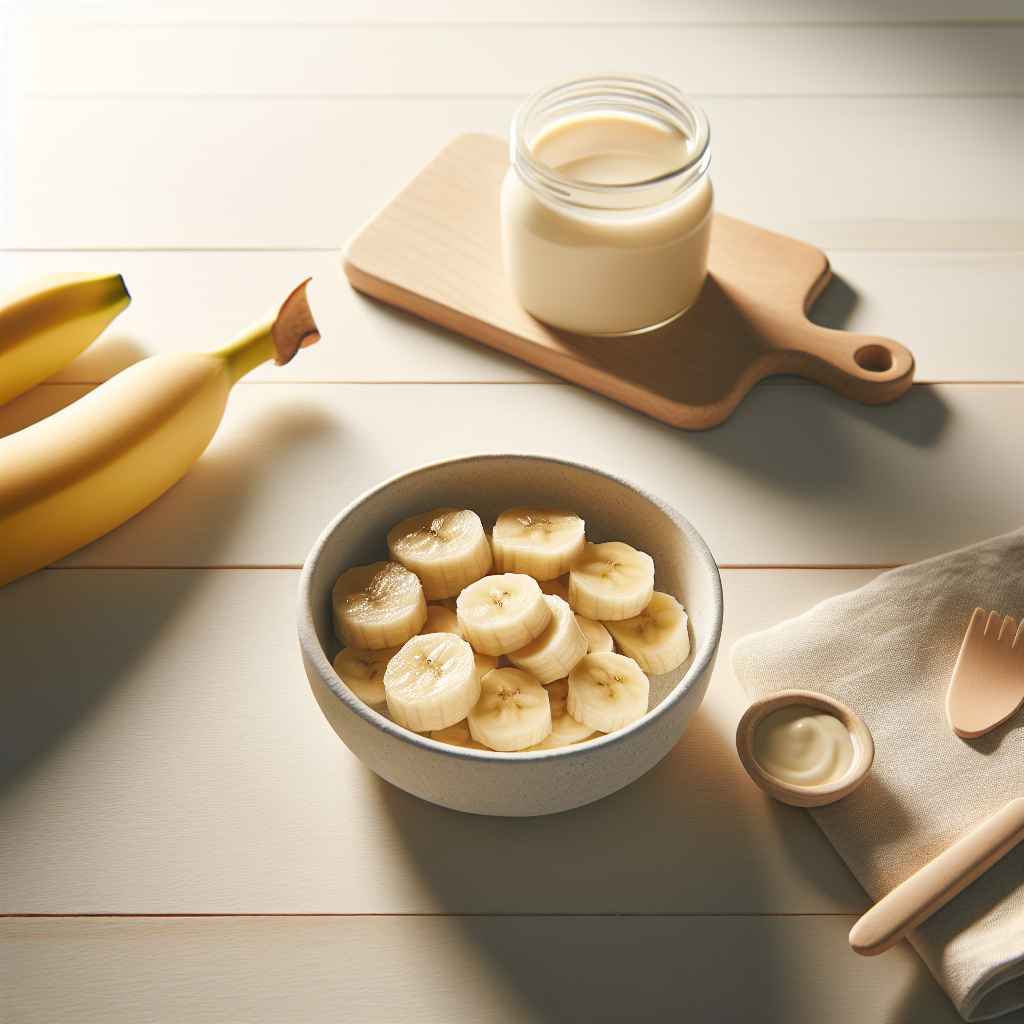
Serve bite-sized pieces of ripe banana or thin rounds that your toddler can easily pick up and self-feed with their fingers or practise with a fork. You can also offer half a peeled banana for independent eating as their biting and chewing skills improve. Continue to supervise mealtimes and ensure the banana remains soft and ripe, as firmer bananas can still pose a challenge for developing molars.
Nutrition highlights
Bananas provide natural energy from carbohydrates and contain potassium, which supports healthy heart function and muscle development. They also offer vitamin B6, which aids brain development, and vitamin C for immune support. The easily digestible fibre in bananas can help support your baby's developing digestive system, though they may have a binding effect for some babies.
Lower-risk serving reminders
Banana has a low choking risk when served ripe and soft, as it easily breaks down in the mouth and becomes slippery. The main concern is when babies bite off pieces that are too large or when the banana is underripe and firm, so ensuring proper ripeness and age-appropriate sizing helps keep this food safe.
Allergen introduction checklist
Banana is not a common allergen and is generally considered a low-risk food for most babies. Allergic reactions to banana are rare but can occur, sometimes in connection with latex sensitivity or oral allergy syndrome, so watch for signs such as a rash around the mouth, hives, or digestive upset.
Common questions
How ripe should a banana be for baby-led weaning
Choose bananas with yellow skin and brown speckles, which should feel very soft when gently squeezed. The flesh should mash easily between your fingers, ensuring it will be soft enough for your baby to gum and swallow safely.
Can I serve banana with the peel on for better grip
Yes, leaving some peel on can help younger babies grip the slippery fruit. Leave about a third of the peel on one end as a handle, ensuring your baby holds the peel whilst eating the exposed banana flesh.
Why does my baby gag on banana
Banana becomes slippery and can break off in larger pieces, which may trigger your baby's gag reflex as they learn to manage it in their mouth. Ensure the banana is very ripe and consider rolling it in ground flaxseed or infant cereal to reduce slipperiness whilst your baby develops their oral motor skills.
General feeding checklist
- Seat baby upright and stable for all meals.
- Model slow chewing and allow baby to control pace.
- Stop and reset if baby is upset, tired, or over-stuffed.
Readiness signs to check
- Baby can sit upright with minimal support during meals.
- Hands and mouth coordinate for bringing food to the mouth.
- Tongue-thrust reflex is reduced, so food is not immediately pushed out.
- Interest in self-feeding and opening mouth for food cues is visible.
Pause and seek advice if
- Coughing is persistent or distress does not settle quickly during meals.
- You notice repeated vomiting, rash, swelling, wheeze, or breathing changes after a food.
- Baby struggles with swallowing progression over multiple meals despite texture adjustments.
- There is a known medical condition affecting feeding, growth, or airway safety.
Other ages: 6–8 months · 9–11 months