Baby-led weaning · age-specific guide
Baby corn for 6–8 months
Baby corn can be introduced as soon as your baby is ready to start solids, which is typically around 6 months of age. When prepared properly by cooking until very soft, baby corn offers a manageable shape and texture for early eaters. Always ensure baby corn is fully cooked and soft enough to squish easily between your fingers before serving.
How to serve at 6–8 months
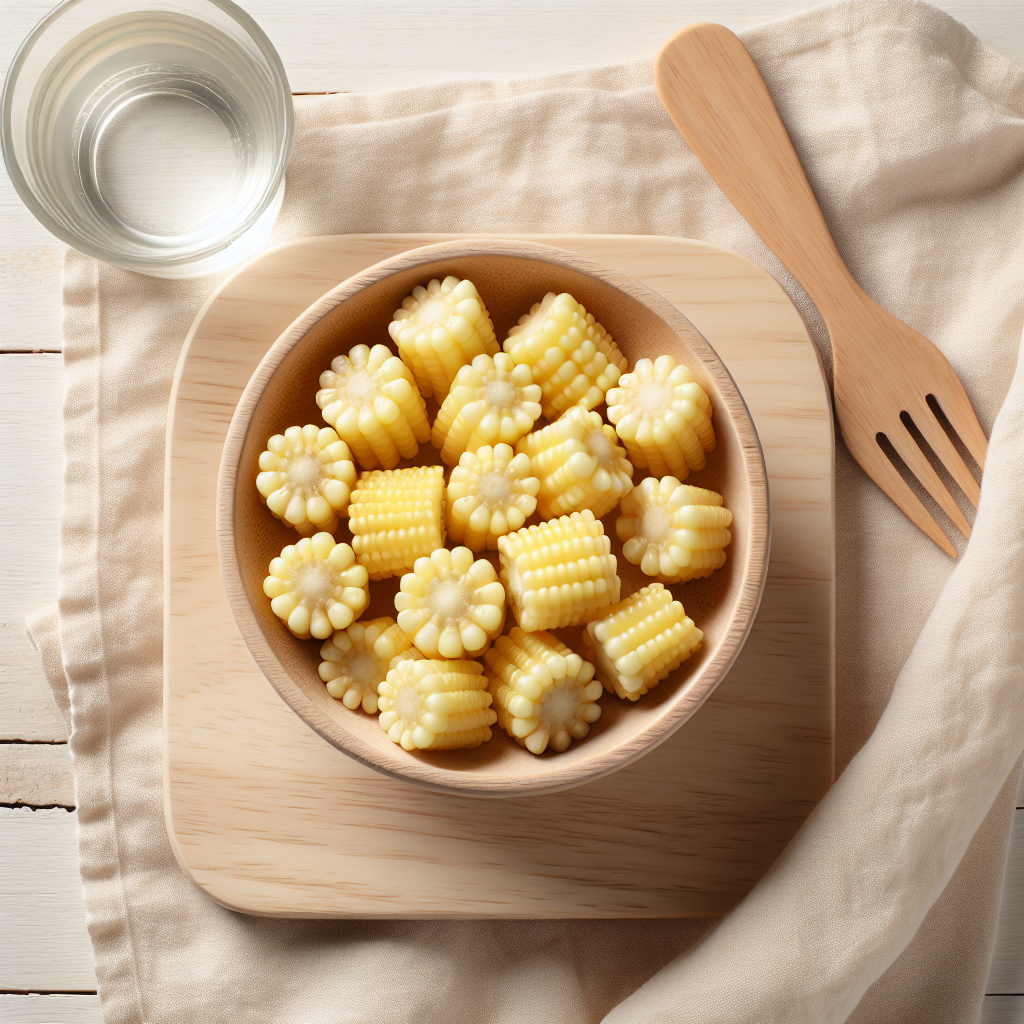
Steam or roast baby corn until very soft and easy to squish between your fingers, which usually takes 8 to 10 minutes depending on size. Serve whole baby corn spears as finger-length pieces, allowing your baby to hold and gum them easily. You can also cut larger baby corn lengthways into halves or quarters to create strips that are easier for small hands to grasp.
Nutrition highlights
Baby corn provides fibre to support healthy digestion, along with folate, which aids cell growth and development. It also contains vitamin C to help with iron absorption and small amounts of B vitamins for energy. While not particularly high in any single nutrient, baby corn adds variety and texture to your baby's diet.
Lower-risk serving reminders
Baby corn has a low choking risk when cooked until very soft, as it becomes easy to gum and breaks down well in the mouth. Its naturally small, manageable size and lack of hard exterior make it safer than mature sweetcorn kernels.
Allergen introduction checklist
Baby corn is not a common allergen and is generally well tolerated by babies. As with any new food, introduce baby corn on its own and watch for any signs of an allergic reaction, though these are rare with corn.
Common questions
Can babies eat baby corn from a jar or tin?
Yes, jarred or tinned baby corn can be suitable if you rinse it well to remove excess salt and ensure it's soft enough to squish between your fingers before serving.
Is baby corn the same as regular sweetcorn?
Baby corn is simply sweetcorn harvested very early before the kernels develop, so it's eaten whole including the cob. It has a milder, less sweet flavour than mature sweetcorn.
Do I need to remove anything from baby corn before serving?
Once cooked soft, baby corn can be served whole or in pieces with no preparation needed. You may wish to trim any very fibrous ends if present, though these are usually tender when cooked properly.
General feeding checklist
- Seat baby upright and stable for all meals.
- Model slow chewing and allow baby to control pace.
- Stop and reset if baby is upset, tired, or over-stuffed.
Readiness signs to check
- Baby can sit upright with minimal support during meals.
- Hands and mouth coordinate for bringing food to the mouth.
- Tongue-thrust reflex is reduced, so food is not immediately pushed out.
- Interest in self-feeding and opening mouth for food cues is visible.
Pause and seek advice if
- Coughing is persistent or distress does not settle quickly during meals.
- You notice repeated vomiting, rash, swelling, wheeze, or breathing changes after a food.
- Baby struggles with swallowing progression over multiple meals despite texture adjustments.
- There is a known medical condition affecting feeding, growth, or airway safety.
Other ages: 9–11 months · 12–24 months