Baby-led weaning · age-specific guide
Arugula for 12–24 months
Arugula, also known as rocket, may be introduced as soon as your baby is ready to start solids, which is typically around 6 months of age. This leafy green has a peppery flavour that some babies enjoy, though others may find it strong at first. Always cook arugula until very soft for young babies to make it easier to gum and swallow.
How to serve at 12–24 months
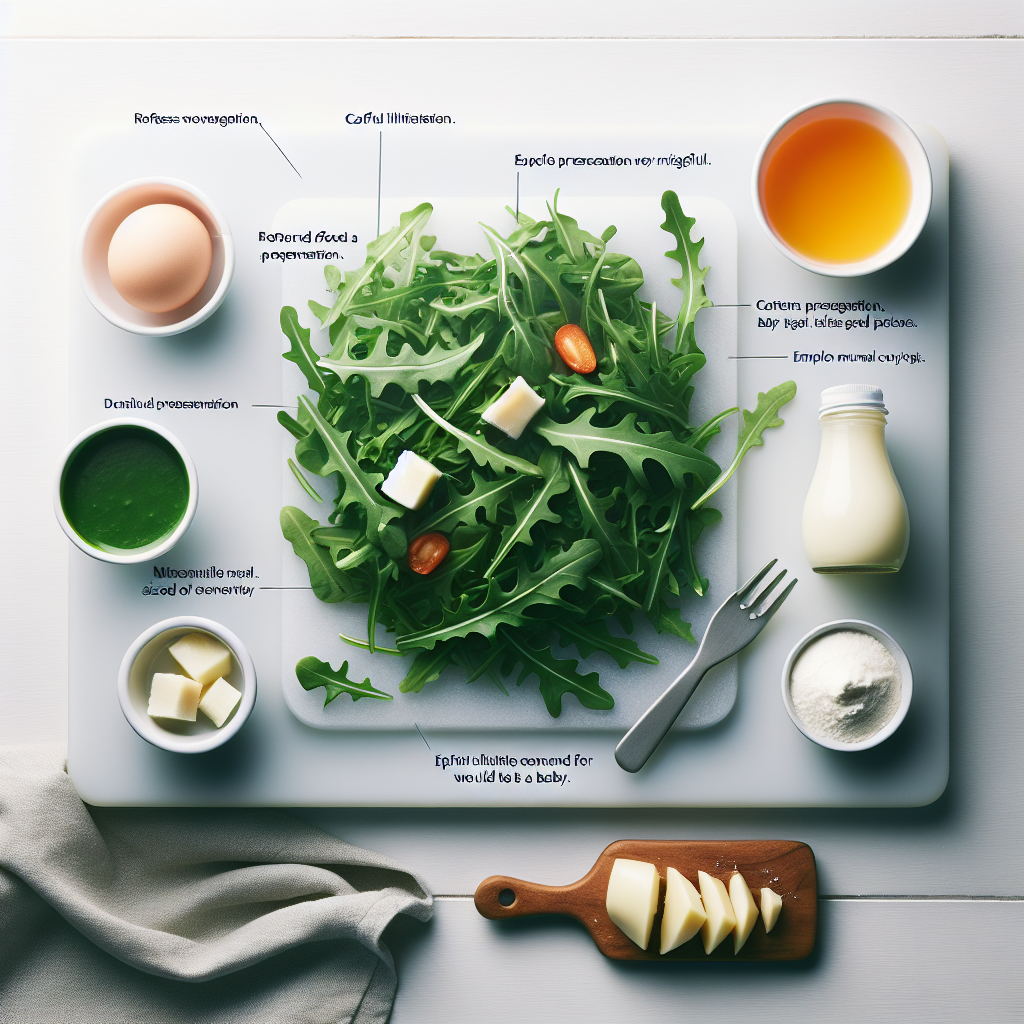
Toddlers can enjoy cooked arugula in family meals such as soups, pasta dishes, or stirred through warm grains like couscous or quinoa. Continue to cook the leaves until soft, and consider introducing arugula in mixed salads with other mild ingredients if your toddler is chewing confidently. Serve pieces that match your child's developing chewing ability, and offer utensils to encourage self-feeding.
Nutrition highlights
Arugula is rich in vitamin K, which supports healthy blood clotting and bone development in growing babies. It also provides vitamin C to support iron absorption and immune function, as well as folate for healthy cell growth. The leafy green contains calcium and a range of antioxidants that contribute to overall health.
Lower-risk serving reminders
Arugula presents a low choking risk when properly prepared, as the soft, thin leaves break down easily with pressure from the gums or teeth. Cooking the leaves until wilted and tender further reduces any risk, making them safe for babies who are just learning to eat.
Allergen introduction checklist
Arugula is not a common allergen and is not among the major allergens recognised in the UK or US. Allergic reactions to arugula are rare, though they have been reported in individuals with sensitivities to other cruciferous vegetables.
Common questions
Can I serve arugula raw to my baby?
Raw arugula is best avoided until your child is older and chewing well, typically after 18 months. The leaves can be tough to manage and may present a choking risk when raw, so always cook arugula until soft and wilted for babies and young toddlers.
How do I reduce the peppery taste of arugula for my baby?
Mixing cooked arugula with milder vegetables like sweet potato or butternut squash can help balance its sharp flavour. You can also sauté arugula with a small amount of unsalted butter or olive oil, which mellows the peppery taste whilst adding healthy fats.
How should I store arugula for baby-led weaning?
Store fresh arugula in the fridge in a sealed container lined with kitchen paper to absorb excess moisture, and use within a few days. Once cooked, arugula can be refrigerated in an airtight container for up to two days or frozen in portions for up to three months.
General feeding checklist
- Seat baby upright and stable for all meals.
- Model slow chewing and allow baby to control pace.
- Stop and reset if baby is upset, tired, or over-stuffed.
Readiness signs to check
- Baby can sit upright with minimal support during meals.
- Hands and mouth coordinate for bringing food to the mouth.
- Tongue-thrust reflex is reduced, so food is not immediately pushed out.
- Interest in self-feeding and opening mouth for food cues is visible.
Pause and seek advice if
- Coughing is persistent or distress does not settle quickly during meals.
- You notice repeated vomiting, rash, swelling, wheeze, or breathing changes after a food.
- Baby struggles with swallowing progression over multiple meals despite texture adjustments.
- There is a known medical condition affecting feeding, growth, or airway safety.
Other ages: 6–8 months · 9–11 months