Baby-led weaning · age-specific guide
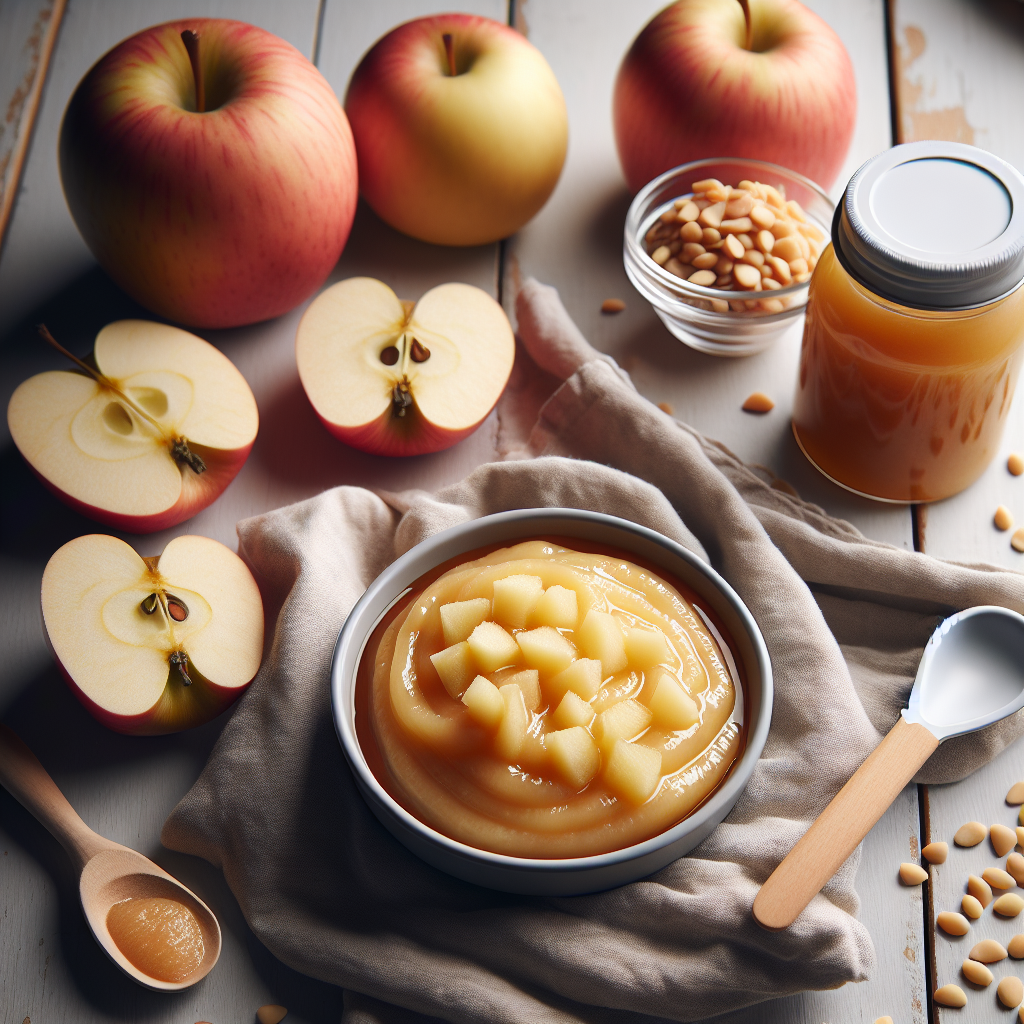
Apple sauce for 6–8 months
Apple sauce can be introduced as soon as your baby is ready to start solid foods, which is typically around 6 months of age. Because it is smooth and soft, apple sauce poses a low choking risk and can be a useful first food, though it works best when combined with other foods to help babies learn to self-feed. Always choose unsweetened apple sauce to avoid unnecessary added sugars.
How to serve at 6–8 months
Serve apple sauce mixed into baby-friendly foods like porridge, mashed banana, or full-fat plain yoghurt to add moisture and flavour. You can also spread a thin layer onto a preloaded spoon or piece of toast to help your baby practise self-feeding. Avoid offering apple sauce on its own in a bowl, as the smooth texture makes it difficult for young babies to scoop independently.
Nutrition highlights
Apple sauce provides a modest amount of vitamin C, which supports immune function and helps the body absorb iron from other foods. It also contains fibre, which aids digestion, though cooking and processing reduce the fibre content compared to whole apples. Apple sauce is low in protein and iron, so it is best served alongside more nutrient-dense foods as part of a balanced meal.
Lower-risk serving reminders
Apple sauce has a low choking risk because of its smooth, puréed texture that is easy for babies to swallow. Its consistency allows babies to move it around the mouth safely without the risk of large pieces becoming lodged in the airway.
Allergen introduction checklist
Apple is not a common allergen and allergic reactions are rare. However, as with any new food, watch for signs of an allergic reaction such as hives, rash, or digestive upset when introducing apple sauce for the first time.
Common questions
Should I choose sweetened or unsweetened apple sauce for my baby?
Always choose unsweetened apple sauce to avoid added sugars, which provide no nutritional benefit and can contribute to a preference for overly sweet foods.
Can I serve apple sauce on its own for baby-led weaning?
Apple sauce works best when mixed into porridge, yoghurt, or spread on toast strips, as its smooth texture makes it difficult for babies to self-feed independently from a bowl.
Is homemade apple sauce better than shop-bought?
Homemade apple sauce allows you to control the ingredients and avoid added sugar or preservatives, but unsweetened shop-bought varieties are also perfectly suitable for babies.
General feeding checklist
- Seat baby upright and stable for all meals.
- Model slow chewing and allow baby to control pace.
- Stop and reset if baby is upset, tired, or over-stuffed.
Readiness signs to check
- Baby can sit upright with minimal support during meals.
- Hands and mouth coordinate for bringing food to the mouth.
- Tongue-thrust reflex is reduced, so food is not immediately pushed out.
- Interest in self-feeding and opening mouth for food cues is visible.
Pause and seek advice if
- Coughing is persistent or distress does not settle quickly during meals.
- You notice repeated vomiting, rash, swelling, wheeze, or breathing changes after a food.
- Baby struggles with swallowing progression over multiple meals despite texture adjustments.
- There is a known medical condition affecting feeding, growth, or airway safety.
Other ages: 9–11 months · 12–24 months